Taraweeh Dua holds a special place during the Tarawih prayer in the blessed month of Ramadan. As Muslims stand for night prayer, the peaceful, quiet hours soften the heart and sharpen focus in worship. Making dua during Tarawih allows believers to seek forgiveness, mercy, and a closer connection with Allah. That is why many people feel a deeper emotional and spiritual connection to their supplications during Taraweeh than at other times of the year.
In this article, we will discuss the important details about Taraweeh Dua, whether there is a fixed supplication, and what is Sunnah versus common practice. We will also share commonly recited duas with meanings and explain the proper times to make dua during Taraweeh.
What Is Taraweeh Prayer in Islam?
Taraweeh prayer is a special night prayer performed only in Ramadan after Isha. It can be prayed in the mosque with other people or at home alone. In this prayer, longer parts of the Quran are recited. The primary purpose of Taraweeh is to spend the nights of Ramadan in worship, remembering Allah, and focusing on faith rather than daily matters.
- Performed only during the month of Ramadan
- Offered after Isha prayer
- Includes extended recitation of the Quran
- Revives the nights with worship and reflection

What Is Taraweeh Dua?
Taraweeh Dua means the supplication made during or around the Taraweeh prayer. It is not a fixed or required dua, but a sincere prayer to Allah that a person is already worshipping. Since Tarawih is prayed at night in a calm and focused atmosphere, these duas carry special spiritual importance.
- Can be made inside the prayer, such as in sujood or final sitting
- Can also be made quietly between rakats
- No specific wording is required
- Focus remains on sincerity and humility
Is There Any Specific Dua for Taraweeh Prayer
Many people think there is a specific dua that must be read during Taraweeh. This idea typically originates from duas commonly recited in mosques. While these supplications are good, they are not compulsory or officially required in Taraweeh.
Key points to remember:
- There is no fixed or mandatory dua for Taraweeh prayer
- Commonly recited duas are allowed but not required
- Personal and heartfelt supplications are encouraged
- Dua should not disrupt the structure of the prayer
- Sincerity matters more than memorized words
Dua Commonly Recited During Taraweeh
There is no must-read dua for Taraweeh, but many Muslims recite simple and well-known duas for forgiveness, mercy, and guidance. People often recite these duas in mosques and at home because they match the purpose and spirit of Ramadan nights.
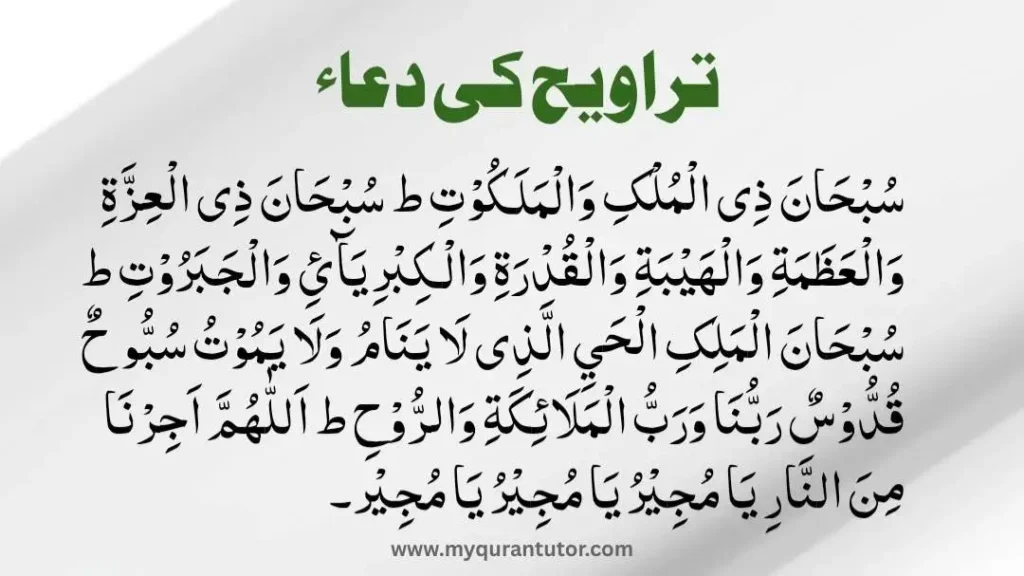
Traditional Taraweeh Supplication
سُبْحَانَ ذِی الْمُلْکِ وَالْمَلَکُوْتِ، سُبْحَانَ ذِی الْعِزَّةِ وَالْعَظَمَةِ وَالْهَيْبَةِ وَالْقُدْرَةِ وَالْکِبْرِيَآئِ وَالْجَبَرُوْتِ، سُبْحَانَ الْمَلِکِ الْحَيِّ الَّذِی لَا يَنَامُ وَلَا يَمُوْتُ، سُبُّوحٌ قُدُّوسٌ رَبُّنَا وَرَبُّ الْمَلَائِکَةِ وَالرُّوحِ، اَللّٰهُمَّ اَجِرْنَا مِنَ النَّارِ يَا مُجِيْرُ يَا مُجِيْرُ يَا مُجِيْرُ
Meaning: “Glory be to the Owner of all dominion and sovereignty. Glory be to the one of honor, greatness, awe, power, majesty, and might. Glory be to the Ever-Living King who neither sleeps nor dies. He is the most pure and most holy, our Lord and the Lord of the angels and the Spirit. O Allah, protect us from the Fire. O Protector, grant us protection”.
When it is recited: This dua is usually read softly between rakats or after finishing a set of Taraweeh. Many people recite it because it praises Allah, shows His greatness, and asks Him to protect us from Hellfire, which matches the main purpose of worship in Ramadan nights.
Short Dua for Mercy and Forgiveness
Arabic: اللَّهُمَّ اغْفِرْ لَنَا وَارْحَمْنَا وَتُبْ عَلَيْنَا
Meaning: O Allah, forgive us, have mercy on us, and accept our repentance.
Why it fits Taraweeh nights:
Taraweeh is performed during the nights of Ramadan, which are known for forgiveness and mercy. This short dua perfectly matches the purpose of these nights, allowing worshippers to seek Allah’s pardon with humility and sincerity while standing in prayer.
Can You Make Dua in Your Own Language During Taraweeh?
Islam is known for its ease and flexibility. You can make dua in your own language during Taraweeh, especially outside the main parts of the prayer. Fard prayers have fixed Arabic recitations, whereas Taraweeh is voluntary, so there is greater flexibility. In Islam, sincerity matters more than language, so you can ask Allah for your needs in any language you understand.
Key points:
- Dua can be in any language outside of Fard recitations
- Focus on sincerity and understanding
- Helps non-Arabic speakers connect deeply with Allah
Sunnah vs Cultural Practices in Taraweeh Dua
Most Tarawih Dua practices are based on the Sunnah, such as offering personal dua in sujood or in the final sitting, and speaking to Allah with sincerity. Other practices, such as long group duas or repeating extra words repeatedly, usually come from local culture rather than from clear, authentic guidance.
To avoid bid’ah (unnecessary innovations) gently, follow what the Prophet ﷺ taught, keep your dua sincere, and respect local customs without thinking they are required. This way, your worship remains accurate while maintaining community harmony.
Benefits of Making Dua During Taraweeh
Making dua during Taraweeh brings spiritual benefits that improve your worship in Ramadan.
- Increased humility: Standing in prayer and turning to Allah with personal needs reminds believers of their dependence on Him, fostering a humble heart.
- Stronger connection with Allah: Consistent supplication deepens the relationship with Allah, creating a sense of closeness and trust in His mercy.
- Peace of heart: Expressing worries, hopes, and gratitude in dua brings inner calm, reducing stress and strengthening faith.
- Ramadan spiritual growth: Making heartfelt dua during these blessed nights enhances reflection, self-discipline, and spiritual awareness, helping Muslims grow in devotion beyond just the act of prayer.
Common Mistakes People Make With Taraweeh Dua
Most of the people make a few mistakes in their Taraweeh dua that lower their focus and spiritual benefits. It is important to know about these common mistakes to make your prayers more sincere and meaningful.
Common mistakes include:
- Believing a specific dua is required, which can cause unnecessary stress.
- Rushing through the dua without thinking or reflecting.
- Joining loud group recitations without understanding their meaning.
- Neglecting personal, heartfelt supplications.
Making Your Taraweeh Dua More Meaningful at Home and Mosque
To make Tarawih dua meaningful, focus on your intentions and understanding instead of just reciting words. Knowing the meaning of your dua and keeping it simple helps keep your worship sincere and heartfelt. Making dua consistently every night also strengthens your devotion and spiritual focus during Ramadan.
Key tips for meaningful dua:
- Focus on intention and sincerity
- Understand the meaning of your supplication
- Keep it simple and consistent
- Adapt according to the home or mosque environment
- Respect prayer etiquette while making a personal dua
FAQs
Is there a compulsory dua for Taraweeh prayer?
No, there is no fixed or required dua for Taraweeh. You can make any sincere supplication from the heart.
Can we recite the Tarawih dua loudly in congregation?
Tarawih dua should be recited quietly so it doesn’t disturb others. It is best to say it softly or during a short break between rakats.
Is it allowed to read a dua from a paper or phone?
Yes, it is allowed to read dua from a paper or phone, especially for beginners. The most important thing is to understand the meaning and be sincere, rather than just memorizing the words.
Can women recite the Taraweeh dua differently?
Yes, women can also recite this dua as men can, with personal and heartfelt words. The first thing is sincerity, rather than just memorizing the words.
Is the Taraweeh dua accepted more on Ramadan nights?
Ramadan nights are blessed, and saying sincere duas during Taraweeh is highly encouraged. Whether your dua is accepted depends on your intention and faith, not just the time.
Final Verdict
Tarawih dua is a personal component of the Taraweeh prayer and is not required to be recited in a specific manner. What matters most is being sincere and understanding what you are asking. Keeping your dua simple, thoughtful, and regular helps you feel closer to Allah and makes Ramadan nights more meaningful. Focus on your true intention, follow prayer etiquette, and let your dua come from the heart.