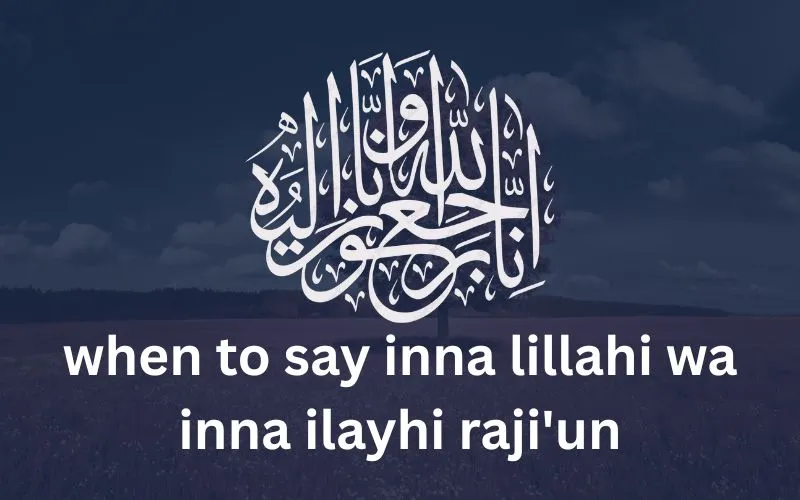
In Islam, when we hear about the death of anyone, it is a big loss; our hearts naturally turn to words that bring comfort and faith. One of the most common and powerful phrases that we say in this situation is Innalillahi Wainailaihi Rajiun, which reminds us that everything belongs to Allah and we also return to him.
Innalillahi Wainailaihi Rajiun is comes from the Quran and is present in Surah Al-Baqarah (2:156), where believers are guided to say it when faced with the hardship of tragedy. It is the best reminder of patience, acceptance, and faith during times of grief.
This article will help you learn about the complete meaning of Innalillahi Wainailaihi Rajiun, Arabic and Urdu text, correct usage, pronunciation, and etiquette of saying this phrase. We also cover common FAQs to help you understand its spiritual depth and importance.
What Does “Innalillahi Wainailaihi Rajiun” Mean?
This is a powerful phrase which means “Indeed, to Allah we belong and to Him we shall return.” It reminds us that our life, wealth, and loved ones all belong to Allah, and that everything returns to Him in the end. Muslims recite this phrase during times of loss or when they hear sad news to show patience, faith, and acceptance of Allah’s decision.
innalillahiwainnailaihirojiun in Arabic has a deep message of peace and trust in Allah’s wisdom. It reminds us that hardship is part of the divine plan, encouraging believers to stay patient and have complete trust in Allah. Reciting it brings calm to the heart, reminding us that all losses are temporary and our final return is to Allah.

Origin — Where It Appears in the Qur’an (Quran 2:156)
Everyone read the phrase innalillahiwainnailaihirojiun in arabic text, because it comes from Surah Al-Baqarah (2:156), where Allah describes the qualities of those who remain patient during hardship. The verse says:
“Who, when disaster strikes them, say, ‘Indeed we belong to Allah, and indeed to Him we will return.’”
This ayah appears in a section that talks about tests such as fear, loss of wealth, or the death of loved ones.
This ayah appears in a section that talks about tests such as fear, loss of wealth, or the death of loved ones. Those who stay patient and say this phrase are promised kindness and guidance from Allah. It reminds them to stay calm, faithful, and accept what Allah has planned.
👉 You can also read the full verse (Qur’an 2:155–157) to understand its full context and wisdom.
Arabic Text, Transliteration & Pronunciation
Arabic Text:
إِنَّا لِلّٰهِ وَإِنَّا إِلَيْهِ رَاجِعُونَ
Innalillahiwainnailaihirojiun in Arabic text reflects the original phrase written in the Qur’an, expressing complete surrender to Allah’s will.
Transliteration:
Inna lillahi wa inna ilayhi raji‘ūn
(also written as innalillahiwainnailaihirojiun text)
Pronunciation Tips:
- Break it into syllables: In-na lil-la-hi wa in-na i-lay-hi ra-ji-oon
- Soften the “ra” sound slightly when pronouncing raji‘oon.
- Practice slowly to capture the rhythm and depth of the phrase.
When said properly, this phrase brings peace and helps one reflect. Those learning it can listen to short recitations or pronunciation audios from reliable Quran sources to say it correctly.
Urdu, Arabic Text Variants & Visuals
Innalillahiwainnailaihirojiun in Urdu:
اِنَّا لِلّٰہِ وَاِنَّا اِلَیْہِ رَاجِعُوْنَ
Urdu Transliteration: Inna Lillah-i Wa Inna Ilaihi Rajiun
This phrase is often written and shared in Urdu during the time of someone’s death. The inalillahi wainailaihi rajiun in Arabic form is:
إِنَّا لِلّٰهِ وَإِنَّا إِلَيْهِ رَاجِعُونَ
You can also use this phrase in Arabic text or download a beautiful artistic design to share on social media as a gesture of sympathy:
Shareable Visual Idea: Create a simple black-and-white image with the Arabic text centered, a soft background, and a caption below: “A reminder that all return to Allah.” (CTA: “Download & Share for Sad News Posts.”)
When and How to Say It — Etiquette & Contexts?
Innalillahi Wainailaihi Rajiun is mostly repeated after hearing of death, loss, accident, or any form of calamity. It is not limited to death, our Prophet Muhammad PBUH said that when you are faced with smaller personal losses, teaching that every difficulty is a test from Allah.
When saying this phrase, do so with genuine feeling and reflection, not just as a routine. You can follow it with a short prayer or kind words such as, “May Allah give strength and patience to the family.”
Dos:
- When you hear about any bad news, say this phrase quickly.
- Repeat this phrase in the form of dhikr to show acceptance of Allah’s will.
- Offer emotional or practical support along with the phrase.
Don’ts:
- Don’t say it as a joke or without meaning.
- Don’t use it instead of giving real help or comfort when someone is upset.
This practice helps keep the true meaning of Innalillahi Wainailaihi Rajiun, turning sadness into remembrance of Allah and finding patience through faith.
Spiritual Benefits & Emotional Comfort
This phrase is the greatest source of strength for Mulsim in deep emotional and spiritual conditions. It is more than just words; it reminds us that every soul belongs to Allah and that every hardship is part of His plan. Saying it in times of sorrow brings peace to the heart, patience, and a stronger faith.
Emotional Effects:
- Encourages Patience: Helps calm the heart and reduce worry during difficult times.
- Brings Acceptance: Reminds us that everything comes from Allah, helping us accept loss peacefully.
- Offers Comfort: Brings people together, as others often say it to show care and support for those who are grieving.
Spiritual Benefits:
- Reminder of Accountability: Strengthen the belief that life and death are in Allah’s control, guiding believers to live righteously.
- Source of Hope and Mercy: Promises Allah’s mercy for those who remain patient and faithful during tough times.
- Strengthens Tawakkul (Trust in Allah): Teaches believers to rely on Allah’s wisdom, finding comfort in His decree.
These benefits make the phrase a timeless form of remembrance, transforming moments of pain into reflections of faith and trust.
Short Prayers & Words to Say After (Practical Phrases)
After saying it, Muslims can follow it with short duas or comforting words. These prayers help strengthen faith and give emotional support to those who are grieving. Below are some commonly used supplications and condolence phrases in Arabic, English, and Urdu, which can be used personally, in messages, or on social media.
Common Supplications:
- Arabic: اللَّهُمَّ اغْفِرْ لَهُ وَارْحَمْهُ
English: O Allah, forgive him and have mercy on him.
Urdu: یا اللہ، اسے معاف فرما اور اس پر رحم فرما۔ - Arabic: اللَّهُمَّ اجْرِني فِي مُصِيبَتِي وَاخْلُفْ لِي خَيْرًا مِنْهَا
English: O Allah, reward me in my hardship and replace it with something better.
Urdu: اے اللہ، میری مصیبت کا اجر دے اور اس سے بہتر عطا فرما۔ - Arabic: إِنَّا لِلّٰهِ وَإِنَّا إِلَيْهِ رَاجِعُونَ
English: Indeed, to Allah we belong and to Him we shall return.
Urdu: بے شک ہم اللہ کے لیے ہیں اور ہمیں اسی کی طرف لوٹ کر جانا ہے۔
Sample Condolence Texts / Posts (innalillahiwainnailaihirojiun text):
- Innalillahiwainnailaihirojiun. May Allah grant patience to the family and mercy to the departed soul.
- We belong to Allah and to Him we return. May the Almighty bless you with strength and peace.
- اِنَّا لِلّٰہِ وَاِنَّا اِلَیْہِ رَاجِعُوْنَ — اللہ تعالیٰ مرحوم کی مغفرت فرمائے اور اہل خانہ کو صبر دے۔
These short messages and du’as are simple yet heartfelt ways to express grief and compassion while remembering Allah.
How Scholars Explain It — Brief Madhab / Scholarly Notes?
All major Sunni schools of thought, including Hanafi, Shafi‘i, Maliki, and Hanbali, agree that Innalillahi Wainailaihi Rajiun should be said whenever someone faces loss or hardship, not only at the time of death. It shows patience and trust in Allah, which are central values in Islam.
Some scholars highlight that it is a form of dhiker, showing complete trust in His decree. While there are no major differences in practice among the schools, scholars emphasize intent and sincerity, that the phrase should be spoken from the heart, not for formality. This shared belief among different traditions highlights its lasting message of patience and trust in Allah’s plan.
FAQs
What does “Innalillahi Wainailaihi Rajiun” mean?
The meaning of this phrase is “Indeed, to Allah we belong and to Him we shall return.” This phrase expresses the belief that everything belongs to Allah and that we will all return to Him after death.
When should I say Inna lillahi wa inna ilayhi raji’un?
Muslims recite this phrase when they hear about someone’s passing or face any kind of loss. It’s also said during moments of difficulty to remind the heart that every challenge comes from Allah and is part of His greater wisdom and plan.
How do you write it in Arabic and Urdu?
- Innalillahiwainnailaihirojiun in Arabic text: إِنَّا لِلّٰهِ وَإِنَّا إِلَيْهِ رَاجِعُونَ
- Innalillahiwainnailaihirojiun in Urdu: اِنَّا لِلّٰہِ وَاِنَّا اِلَیْہِ رَاجِعُوْنَ
Is it permissible to say it for small losses (like lost keys)?
Sure, it is allowed. Prophet Muhammad PBUH encouraged saying it for any kind of loss, not only when someone passes away. It reminds believers to stay calm, patient, and to place their trust in Allah in all circumstances.
Can I say it in another language?
It is best to say it in Arabic, as it is written in the Quran. However, you can explain its meaning in your own language to help others understand or learn it better.
Is it part of the Qur’an? Which ayah?
Sure, Innalillahi Wainailaihi Rajiun comes from Surah Al Baqarah (2:156). It is part of verses 155–157, where Allah praises those who stay patient and put their trust in Him during difficult times.
Final Verdict
This is more than just a phrase; it is a strong expression of faith, patience, and acceptance of Allah’s will. It reminds us that everything we have in our lives, blessings and even our losses, belongs to him alone. Saying it with sincerity during times of sorrow brings comfort and helps us trust Allah’s mercy. Keep its Arabic and Urdu versions close, understand its meaning well, and let it remind you that every return is to Allah. As you know, innalillahi wainailaihi rajiun is Arabic word and MY QURAN TUTOR is offering Online Arabic course for kids and adults.