Ghusl is full-body cleansing in Islam, and it not just cleans the body but also your soul. Wudu can only cleans few parts of the body, but ghusl is needed after major impurity, such as after marital relations, the monthly cycle, or after giving birth. Knowing the meaning of ghusl is important because it makes prayers and worship valid.
Here you will learn about the situation in which Ghusl is required. It also shows the correct method of performing Ghusl, including important guidelines for women. All steps are explained in clear and simple words so you can perform Ghusl properly with confidence and care.
In this guide, you will understand ghusl fully, from its religious importance to the correct way of performing it. Whether you are learning for the first time or improving your practice, this guide provides clear and reliable guidance based on trusted Islamic sources.
What Is Ghusl?
Ghusl helps to cleanse your whole body in Islam and remove major impurity. It is more than Wudu, which only cleans a few parts of the body. Ghusl is needed before worship, like prayer, to stay spiritually and physically clean. These practices come from the Quran and Hadith and focus on cleanliness and devotion.
Ghusl helps Muslims stay ritually pure so they can pray, fast, and take part in religious activities with a clean body and soul.

When Ghusl Becomes Obligatory
Ghusl is needed in different situations to ensure physical and spiritual purity. Knowing when it becomes compulsory helps Muslims worship properly and follow Islamic teachings correctly.
After Janabah (Major Impurity)
In case of marital relations or the release of seminal fluid, Ghusl is required to remove impurity and cleans whole body. Performing this in such a situation cleanses the body and makes a person ready for prayer and other acts of worship.
After Menstruation (Hayd)
If women are passing through menstrual period, then Ghusl is necessary. By this, it is confirmed that they get completely cleansed and are able to participate in prayers and other religious duties. It cannot be delayed once the period ends.
After Postpartum Bleeding (Nifas)
This important cleansing step is important after giving birth to a child. When the postpartum bleeding stops, then girls can perform Ghusl. This purification allows women to start praying again and take part in other acts of worship
Recommended Sunnah (Bonus Cases)
Ghusl is not required, but it is recommended before Friday prayers, Eid prayers, and Hajj or Umrah. Doing this follows the Sunnah and brings reward.
Step-by-Step Ghusl Guide (Ghusl Steps)
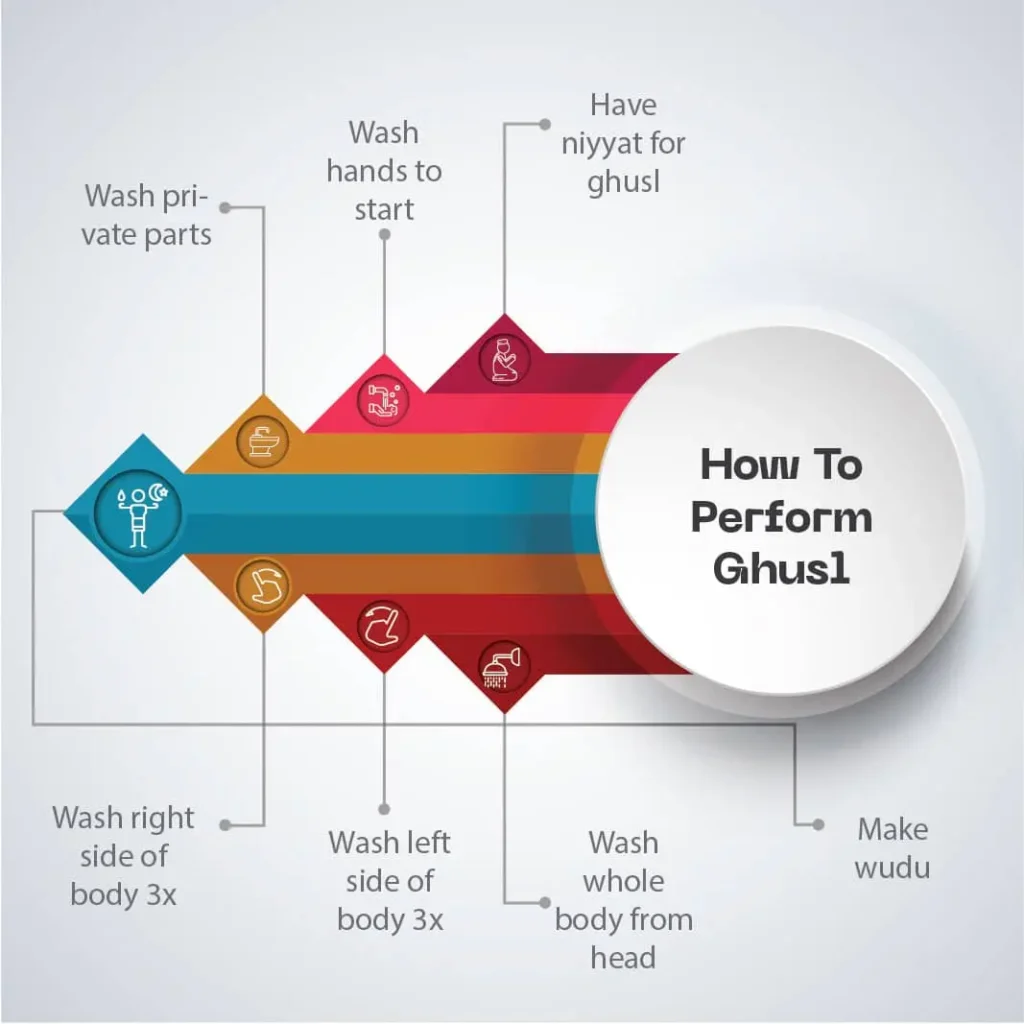
Here we provide a complete, detailed step-by-step guide on Ghusl and how to perform it correctly:
- Preparation & Intention (Niyyah)
- Make a sincere intention in your heart to perform ghusl.
- Niyyah is internal; it does not need to be spoken aloud.
- Step 1: Say “Bismillah”
- Begin by saying “Bismillah” to invoke blessings.
- It marks the start of purification with spiritual focus.
- Step 2: Wash Hands & Private Parts
- Wash both hands three times.
- Clean the private parts to remove any impurity.
- Step 3: Perform Wudu
- Perform a full ablution (wudu) before ghusl to ensure cleanliness.
- Perform a full ablution (wudu) before ghusl to ensure cleanliness.
- Step 4: Wash Entire Body
- Pour water over your head three times.
- Wash the entire body, starting from the right side, then the left.
- Ensure water reaches every part of the body.
- Completing the Ritual
- Dry off after washing.
- You are now ready to pray or perform acts of worship.
Difference of Ghusl for Men and Women
The main steps of ghusl are the same for men and women, but there are some important differences. Knowing these helps women perform ghusl properly, comfortably, and with good hygiene.
- Same core steps: Both men and women follow the same main steps, including making the intention, doing wudu, and washing the whole body.
- Hair care: Women should loosen or separate long hair so water reaches the roots.
- Privacy and comfort: Ghusl should be done in a private, safe place, taking enough time to wash the whole body properly.
- After periods: After the monthly cycle, women should first clean the private area and then perform full ghusl for complete cleanliness.
By following these guidelines, women can perform ghusl correctly without missing any essential steps, ensuring spiritual and physical cleanliness every time.
Valid vs. Recommended Practices in Ghusl
When performing ghusl, it is important to know which steps are required and which are recommended for extra reward. This helps you perform ghusl correctly while also gaining more spiritual benefits.
- What Must Be Done (Fardh) for Valid Ghusl:
- Water should touch every part of the body, including hair and skin.
- Rinse the mouth and nose like in wudu.
- These steps must be done for ghusl to be valid, according to scholars.
- Sunnah & Mustahab Enhancements:
- Begin with the right side when washing limbs or body parts.
- Use perfume or scented soap after ghusl for personal hygiene (optional, but recommended).
- These acts are not required but carry an additional spiritual reward.
Doing the required steps makes ghusl valid, and the recommended steps give extra spiritual reward.
Common Mistakes to Avoid in Ghusl
Doing ghusl correctly is important, but many people make small mistakes that can affect its validity or reward. Knowing these common errors helps you stay properly clean every time.
- Forgetting Niyyah (intention): Ghusl is not complete spiritually if you start without a sincere intention in your heart.
- Missing water on hair or body: Make sure water touches every part of the body, including hair roots and hidden areas.
- Focusing too much on soap: Using soap is fine for cleanliness, but the main focus should be on washing properly for spiritual purification.
By avoiding these mistakes, you can perform ghusl fully and correctly, ensuring both physical and spiritual cleanliness.
Benefits of Performing Ghusl
It is more than just a practice. It cleans the body and the soul too, helping improve well-being and worship.
- Physical Hygiene & Refreshment: washing the whole body keeps you clean and makes you feel fresh.
- Spiritual Purity Before Prayer: Ghusl cleans major impurities so prayers and worship can be accepted.
- Peace of Mind and Readiness for Worship: Performing ghusl brings a sense of calm and readiness, helping focus on spiritual connection.
These benefits make ghusl an important part of daily Islamic life, keeping the body clean and the mind spiritually aware.
FAQs
What does ghusl mean in Islam?
Ghusl is a full-body ritual purification required in Islam to remove major impurities. It cleanses both the body and soul, making a person spiritually ready for prayer and worship.
When is ghusl required for women?
Women are required to perform ghusl after menstruation, postpartum bleeding (nifas), or sexual activity. It ensures they are ritually pure before engaging in prayer or other acts of worship.
Can ghusl be done with a normal shower?
Yes, a normal shower can count as ghusl as long as water reaches every part of the body, including the hair and roots. The key is complete coverage, not the type of shower.
Is soap necessary for ghusl?
Soap is not required for ghusl. It can be used for cleanliness, but the main purpose is spiritual purification through water reaching all parts of the body.
Does ghusl remove sins?
Ghusl physically removes impurities and spiritually symbolizes purification. While it cleanses the body and prepares one for worship, seeking forgiveness through prayer and repentance is necessary for sins.
Final Verdict
Ghusl is an important practice in Islam that keeps both the body and soul pure. Knowing its meaning, when it is required, and the correct steps helps every Muslim stay clean and ready for prayer. For women, the steps are mostly the same, with extra care for hair and privacy. Doing ghusl properly after major impurities ensures spiritual purity, physical cleanliness, and peace of mind. Making ghusl a regular, mindful practice helps you feel refreshed and connected while keeping your worship valid.
Note: If you want to learn about the Quran and Islam, you can join MY QURAN TUTOR, as we have qualified male Quran tutors includes female teachers.